Tuesday, 28 July 2015

Summer Explorers! Free Anime Screenings at the Japan Foundation (July 2015)

This summer the Japan Foundation have organised a day packed full of special anime film screenings, all of which can be enjoyed on the big screen! 
11:30am: Anime for Everyone! (Recommended for ages 2+)KOMANEKO – The Curious Cat
1:00pm: Anime Goes Underground (Recommended for ages 8+)SOS! TOKYO METRO EXPLORERS: THE NEXT
2:10pm: Anime Meets (Recommended for ages 10+)Negadon: The Monster from Mars
Kakurenbo: Hide and Seek
Planzet
4:15pm: Retro Anime (Recommended for ages 8+)Science Ninja Team Gatchaman: The Movie
Featuring an intro by Japanese anime expert Helen McCarthy.

Date:1 August 2015 from 11.30am
Venue:
BAFTA, 195 Piccadilly, London W1J 9LN
Nearest tube station: Piccadilly Circus or Green Park

Other anime's shown by Japan Foundation have been - 
Barefoot Gen (which will be showing again check website for more details)
For more news on anime, cosplay, games and Japanese culture follow me on Twitter and Facebook.

Sunday, 22 February 2015

It Only Happens in the Movies? Japanese Cinema and Encounters: All About Our House

Have you ever wondered the complications of owning your own house in Japan? Well this film explores BUILDING your own house and all the processes to get to living in your own dream home. Part of the Japan Foundation's Touring Film festival: It Only Happens in the Movies? Japanese Cinema and Encounters - All About Our House - written and directed by Koki Mitani (The Uchoten Hotel, Once In a Blue Moon).

We follow the married couple Naosuke (Naoki Tanaka) and Tamiko (Akiko Yagi) who decide to build a new house from scratch instead of renting (society norm), recruiting a trendy young interior designer, Mr Yanagisawa, to plan, and Tamiko’s retired-carpenter father to build. However, not too long there is a culture clash between the innovative ideas vs the sturdiness of the house foundations and the plans of there 'contemporary' house has now become rather traditional instead. The project begins to move from their and Mr Yanagisawa dream home to Tamiko's fathers last project doing as he pleases and poo pooing any new ideas.

It's great seeing the team of builders a bunch of elderly men working together with such vigour and joy and doing a great job to ignore the Naosuke's. The best argument that is underlined through the whole film is that of the front door opening out or in. Out is a sign of American architecture but the builders want a traditional Japanese house. This is almost the deciding factor of Mr Yanagisawa quitting.

It shows two sides of the coin and should promote compromise or a fusion of two styles but doesn't the father is set on his ways and despite his daughter not wanting a tatmi (Japanese room) he makes sure to make the room double the original quoted size to spite her. It is funny watching the quarrels but there isn't much development.

I liked the holy rituals to purify the land and to bless the house as it gives an insight into Jpanese tradition and culture. All in all the house is finally built, the foundation is sturdy and has a little artistic flair including some rare bamboo tiles that Mr Yanagisawa suggests and actually impresses the builders.


Catch the cinema on the big screen in Edinburgh Filmhouse and Nottingham Broadway in March.

Friday, 6 February 2015

It Only Happens in the Movies? Japanese Cinema and Encounters: A Letter to Momo

After mentioning on all my feedback forms last year previously writing in capitals 'More anime please' I was pleased to see two on the line up for the touring film festival from the Japan Foundation. The ICA is a great choice of venue in the heart of the West End holding a cosy hide away for Japanese enthusiasts.

A Letter to Momo (Momo e no tegami in Japanese) follows a 11-year-old girl called Momo who ='s world is turned upside down by the recent death of her father. Growing up in Tokyo her whole life and then being up rooted to the country was already a shock to her system. At first we see Momo as a shy and bewildered child, constantly hiding behind her mother and barely saying a word. As they are ferried to their new home she is hit by three water drops on a sunny day, this is not mere water, these drops hold the form of Yokai (demons).

They move to the old family house with an uncle and aunty on a remote island where time has stopped living in old fashioned sliding door wooden buildings with holy shrines on every road and no shopping centers around. Momo is constantly thinking about her father due to having an argument the day he died and finding an unfinished letter from him addressed to her...which she keeps close to her at all times reading over and over again the words “Dear Momo.” Her aunty tries to entertain her by showing her the attic and her uncles prized Yokai picture books. One is particular in a box becomes prey to the water demons.

Directed by Hiroyuki Okiura (Jin-Roh: The Wolf Brigade). Seven years in the making and supported by a top-class team of skilled creators, A Letter to Momo uses traditional hand drawn animation fused with a simple story. Often compared to Spirited Away this story has similar aspects but is completely different in  everyday. Here we find the three demons are there ona  mission to keep Momo and her mother safe till the father reaches the afterlife. We aren't given much more information about the mission or the other spirits that Maade makes friends with.

Alongside the trials of stopping the demons from stealing items and ran sacking crops to feed their never ending hunger she also has a sort of love interest in local boy Yota. She's scared to make friends or dive off the bridge same as she is to move on and let the painful memories of her father go. Her relationship with her mother is also strained due to miscommunications. Sadly the mum thinks Momo is lying when confronted about the stolen items mysteriously appearing in the attic and they argue which triggers off an asthma attack.

The mothers illness turns out to be quite severe and she requires medical assistance but guess what there's only one doctor on the Island and he's off on a house call on another Island. At the same time the weather worsens and well Momo has to take some drastic measures. We see only one part of the journey where she and Iwa (Momo's mother's old school friend) travel with spiritual assistance to sheld them from the rain and wind and miraculously her mother is cured.


The demons are funny and only stay for a span for a few days and it is quite sad to see them leave after finishing there mission. However do they fulfill Momo;s last request about sending her letter to her father? You will just have to see for yourself.  There is also an American dub version of this film.

Buy tickets to watch it now.
For more news on anime, cosplay, games and Japanese culture follow me on Twitter and Facebook.

Wednesday, 4 February 2015

It Only Happens in The Movies? Japanese Cinema and Encounters: Blood and Bones

Blood and Bones also known as Chi to Hone in Japanese is directed by Yōichi Sai and starring actor/comedian/singer Takeshi Kitano (who also starred in Canadian movie  Johnny Mnemonic as well as Japanese productions). It is based on the semi-autobiographical novel 'Chi to Hone' by Zainichi Korean author Yan Sogiru (Yang Seok-il).

Released in Japan 2004, it was chosen to be shown as part of the Japan Foundation's It Only Happens in The Movies? Japanese Cinema and Encounters touring film festival now. The film was nominated for 12 Japanese Academy Awards and won four, including Best Actress, Best Director, Best Supporting Actor, and Best Screenplay.

Set in the 1923, the story is narrated by son Masao who describes his father's journey from Korea to Japan.  A young Kim Shun-Pei moves from Cheju Island (South Korea), to Osaka (Japan). This isn't an easy transition due to war between the country and despite fighting brothers in arms there is still a lot of hatred between the Japanese and Koreans.

We watch the cruel misdeeds of Kim abusing his wife and children throughout the film. This leads to an inner greed as the violent man decides to destroy a house to make it into a fish cake factory and forces his family to help in slave labouring for him. Even though this provided jobs for the poor Korean-Japanese community he exploits his employees and punishes them for revolts.

He makes a fortune, then takes a mistress and continues to mistreat his former family whenever he is stressed. He shows respect to no one. Later he closes the factory when business declines, becoming a money lender now with help from his mistress becomes a successful loan shark. His evil personality does not change towards even his brother or family. After his mistress develops a brain tumour he shows some human compassion and takes care of her and takes on a maid to look after her full time.

This turns out to be a new mistress as he wants another heir to his wealth. Through much raping he has many illegitimate children who all eventually leaves him. Eventually his daughter marries a man she doesn't love to escape his abuse and she ends up in an abusive marriage. Sadly she seeks advice from her brother Masao who recommends she leave her husband or quit  moaning. Sadly she commits suicide leaving the husband quite happy. This affects Kim who beats up everyone at the funeral.

At this point he is losing his physical strength and mind, he carries on his mean life even after he kills his terminally ill mistress ad the second mistress leaves him. He seeks consolation from his wife who he left for dead after she developed cancer, she recoils and dies eventually too.

After all his mean-ness he kidnaps his illegitimate son, makes him stay with him to his bitter demise and leaves his fortune to Korea.

I left the cinema screening feeling sad as no one got a happy ending. Masao moves away and only the uncle and his wife survive. the poetic cousin moves back to Korea and is never heard from again. Great acting from the cast especially Beat Takeshi. Catch the film as it tours the uk : http://www.jpf-film.org.uk/

Sunday, 1 February 2015

It Only Happens in the Movies? Japanese Cinema and Encounters: A Bolt from the Blue


A time travelling magician? A great addition to the Japan foundation's touring film festival at the ICA London.

A Bolt from the Blue also known as Seiten no hekireki was a hit in Japan from 2014 due to being directed by a famous comedian, Hitori Gekidan. Based on Hitori’s own novel, it was a huge box office success in Japan. However there us more to the movie than meets the eye.

A movie following a dead beat magician with the skill but nothing to motivate him. Begrudging his parents for all his failures he lives by himself after leaving his dad after college. Resentful about his mother leaving him, he watches younger magicians get fame for his tricks.

One day after his flat is flooded he receives a call that his father is dead. He goes to the place where his body is found and discovers he had been homeless and living in a cardboard hut. In the hut he finds a photo of his father holding him as a baby, then like magic a both of lightening hits him and he is taken back in time to the year 1973.

Asakusa is the a place to launch stage performers and with help from a kid he is accepted as a trainee magician. It is here where he crosses paths with his young father to be.

With all the indications of his fathers faults and his birth nearing - will he find out the truth about his mother? Will he carry on to live life so bitterly. A great film to take inspiration from. Shape your life as you want do not run away and make excuses.

Buy tickets to the next showing (Jan 30-March 2015): https://www.ica.org.uk/whats-on/seasons/japan-foundation-touring-film-programme

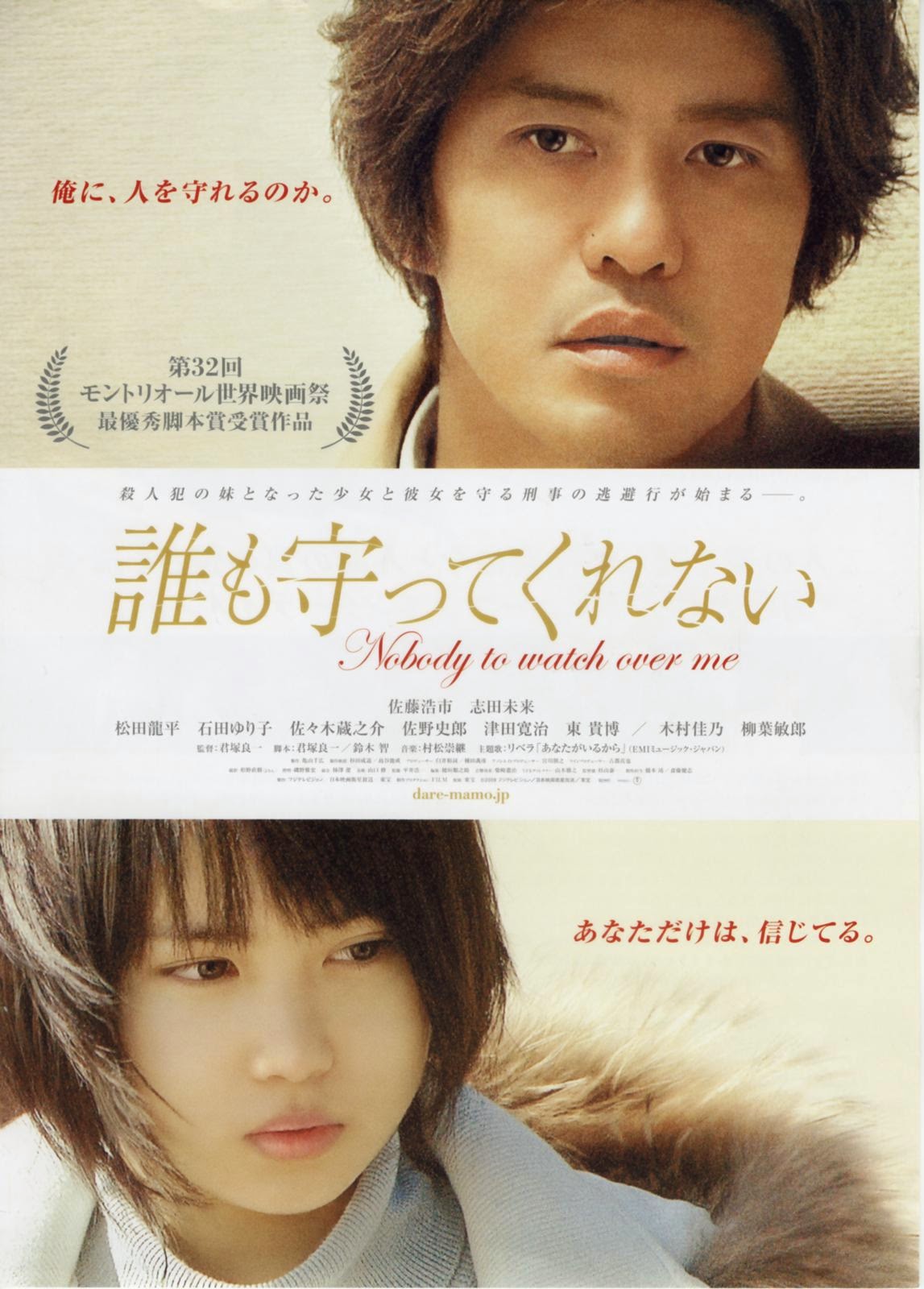
It Only Happens in the Movies? Japanese Cinema and Encounters: Nobody to Watch Over Me


My favourite genre in Japanese film is Horror/thriller so I was excited to see 'Nobody to Watch over me' part of the Japan Foundation's touring film festival at London ICA.

Nobody to Watch Over Me (also known as Dare mo mamotte kurenai in Japanese) was a particularly interesting film directed and written by Ryoichi Kimizuka. It looks at crime through a different perspective. After watching Lady Vengeance you get an insight into the police force and how they humiliate the perpetrators on TV and seek out revenge. Nobody to watch over me follows the sister of an alleged killer. 


A police officer part of the case is sent to protect her from the media, stalkers and committing suicide. Whilst he does so and out of sympathy goes back to the family home to retrieve her mobile her mother has had enough of the allegations and hangs herself. The case is now point towards the police force for neglecting to save the public and protecting the 'killers' family.

Strange thing is we are never really sure if the boy killed the sisters or not, seeing as the only possible person to have interacted with him on the day was the sister and she refuses to talk.


Sadly the 15year old is hounded by friends, Internet and general weirdos. At the same  time you do start to question the police officer who chooses to hide her at a former victims hotel by the sea.

Needless to say this is a dark psychological movie with some action scenes to compare driving to the fast and furious Tokyo drift. Loving how versatile Ryuhei Matsuda (actor from Otakus in Love) is playing partner Misima giving the odd comedy moments.

A film to make to think of your family and appreciate all those precious moments before they are gone.

To buy tickets to the next screening as part of the touring film festival (30th Jan-March) use this link:
http://www.jpf-film.org.uk/venues/ica

It Only Happens in the Movies? Japanese Cinema and Encounters: My Little Sweet Pea


 I began to see the genre Japan Foundation chosen for this years film festival at ICA London- loss of family and had a great sadness watching the protagonist fight her emotions on whether to accept her estranged mother or not.

Catch another showing of this film:

Filmhouse
26 February 2015

Tyneside Cinema
2 March 2015

mac birmingham
3 March 2015

My little Sweetpea

A contemporary film set in current Kapan where Meguka lives a life of struggle with her brother ( Ryûhei Matsuda also starred in Otaku's in Love). Their father dies 3 years ago and lives on her Brothers wages or so she thinks.

Her world is turned upside down when a woman turns up on there  doorstep claiming to be her mother. Abandoning them as children due to their fathers infidelity Megu and her brother find it hard to forgive her.

However out of greed then agree yo her living with them as she had been sending them rent money regularly but was now unable to afford it. Megu is forced to lice with her mother Saiko as the brother decides to move out out of irritation.

She cannot tolerate the molly codelling and invasion of privacy, after her manga is thrown out and her application to voice acting school opened she lashes out at Saiko. Soon after she passes away from advanced liver cancer.

The story takes a strange detour where Megu travels to her mothers home town to bury her. Here us stared at and treated like a celebrity as she is the spitting image of her mum. Saiko was the high flyer and beauty queen of town.

Megu begins to learn more about her mother and the hardships of divorce. Did she come to stay with her knowing these were the last moments of her life? She didn't become the rich singer she dreamed of being but she was happy to have her kids. Through meeting the people in the village especially Saiko's friend Micheru she forgives her mother.

This film covered a lot of life's hardships, people are complex and not always clear. Also it was great to see hard working adults indulging in past times such as manga. Parents overall shape our behavior and way of living. Also was nice to see the curators choose a film looking at Otaku culture and having the actor Matsuda re appear after being show in Otaku's in Love at the last years touring film festival.


Monday, 15 December 2014

Eastside stories: Love Strikes


Where: ICA London/ Belfast/Bristol/Dundee/Edinburgh/Newcastle upon Tyne/Nottingham/Sheffield
When: 31 January to 27 March 2014

Set one year after the drama series 'Moteki'. Hitoshi Ohne's romantic comedy, based on a hugely popular manga and TV series, became a massive hit in Japan and was selected for the Top Films of 2011 by The Japan Times, Kinema Jumpo and Eiga Geijutsu. The Japan Foundation chose this film to be part of their East side stories: Youth culture touring film festival.

Set one year after the conclusion of the Japanese drama series 'Moteki', the film Love Strikes! continues to follow 31-year-old Yukiyo Fujimoto. Following Yukiyo’s feelings remaining somewhat unresolved after the mini series. Love Strikes! retains the elements of comedy and honesty that were present in both the manga and drama series, all the while delving deeper into the emotional obstacles faced by the protagonist Yukiyo.

Yukiyo, a man with no aim in life starts a new chapter in his life by working as a writer for a news site. Suddenly, Yukiyo experiences 'moteki' – a period when a man becomes suddenly popular with woman. Magazine editor Miyuki, who he talks to on twitter, one day initaites a meet up. Miyuki turn's out to a be woman rather than a geeky bloke. Then Miyuki's friend Rumiko, beautiful shop assistant Ai and beautiful, but tough co-worker named Motoko all become interested in Yukiyo. He tries to calm down, but is shaken by the interests of these women.  So many women but who is the one for Yukiyo?

The idea of one man simply attempting to lose his virginity is hilarious. Director Hitoshi Ohne brings the same charm as he did from the series. Using elements of musical sequences, slapstick moments, and some tense scenes of Yukiyo’s interaction with women. The film pokes fun at Yukiyo’s circumstances as well as showing his gradual growth as an individual, with each womanly encounter he begins to understand people better.

Mirai Moriyama holds the film together, without his exceptional acting as well as flamboyant dancing to rival or better that of guest star's Perfume. he encompasses the sexually frustrated Yukiyo perfectly. His execution of internal dialogues really make the film brilliant. Considering the length of the film you get a glimpse into the love affairs he has. Nagasawa’s character of Miyuki is cute, and mysterious giving Yukiyo mixed signals constantly. Whereas Aso’s character of Rumiko is shy and confident at the same time.

Love Strikes! presents a hysterical look into one man’s journey to find that special someone whilst dabbling in moteki. The Japan Foundation did a great job with the selection and getting q&a's with the directors and actors.

Friday, 7 March 2014

Culture Japan Night London with Danny Choo


Culture Japan Night London with Danny Choo

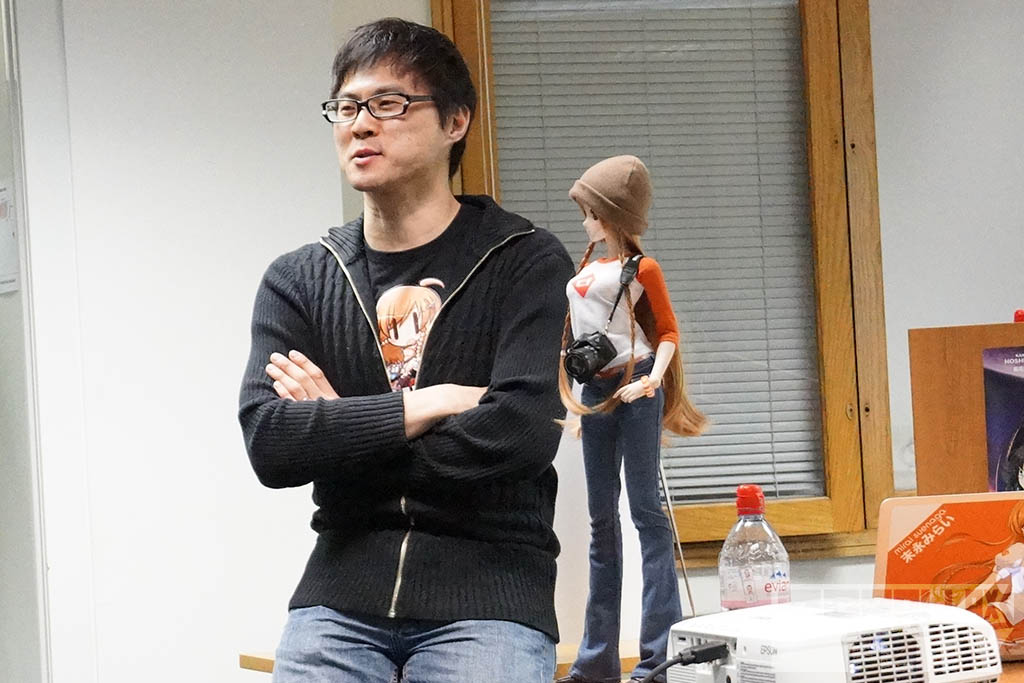
Over the years, Japan Foundation have become well known for their hands on approach to showcasing Japanese culture by bring over great guests, providing top notch workshops and curating exciting film festivals. On Wednesday 5th March they had none other than Hackney born Japanese business/blogger sensation  (and son of famous shoe maker), Danny Choo, give a talk about what he’s been working on at Culture Japan Night London.
Armed with his mascot Mirai Suenaga Smart Doll, (was her Birthday on the 3rd March too) Danny Choo talked about a variety of different things such as the development of the doll, his website and culture japan show, as well as his insights into japanese culture and a few nuggets of information on how business is conducted in japan. During the talk, Danny mentioned that his current main focus is the smart doll project and to expand the functionality of the doll over the coming years. During its continued development, Danny and his team have wracked their brains to come up with a design that not only accommodates the necessary electronics within the limbs but also to make it cost effective to to help reduce the final cost of the doll to the consumer.

CJN_00
Mr Choo and Mirai doll!

Past models of the smart doll can be moved remotely using the controls on a Bluetooth paired Android Smartphone. Choo wants to go a step forward and make a walking, talking smart doll with artificial AI. As many are getting used to the likes of Siri on the iphone, imagine having a doll version of that which can talk and respond to your speech. The Mirai doll will have its own voice, but Danny hopes to make it possible for users to download and install additional “voice packs” utilizing the vocals of famous seiyuu voices which could really excite the Otaku consumer. An interesting facet of the production process of the dolls is that they are aimed at other countries rather than focusing on japan. When asked about the time delay from the manufacture of the dolls in Japan to when it would be available for overseas customers, he answered this was aimed exclusively for the rest of the  world not Japan!

Amongst talk of his latest doll projects he talked about anime and licensing from his experiences in interacting with several anime studios. Even when you’re in contact with the staff at a particular company and everything seems fine, things can sometimes turn sour if said company has a problem with how you may be utilizing their IP. Even things like the company not approving of your fan art of their anime could cause talk of lawsuits to be thrown around with shorter than a week’s notice.

CJN_02
Another difference in how the market for anime differs in Japan is that the average Japanese consumer for anime and manga are content with having to pay as much as £350 for a Blu-Ray set for a series, which most people overseas would call extortionate prices since many fans in the UK would expect to pay around £40-60 max for a full season on blu-ray in their local retailer or online. Therefore the Japanese industry rarely feel they need to bother with considering the western anime market when consumers in their home territory are already prepared to pay much higher prices for anime and than those abroad.

In reference to Danny’s appearances at events, the most noteworthy being the Culture Japan Con created by his company, many people in the audience asked if he had any plans to attend UK conventions. To this, he said he’d happily attend if he were invited and they didn’t clash with his other events. When quizzed further about future Culture Japan events, Danny mentioned that the next event is likely to be in Malaysia, where he held the Culture Japan Con last year. So if you are in demand of Mirai merchandise, it would be a great experience to save up your money and go to the next convention abroad perhaps?


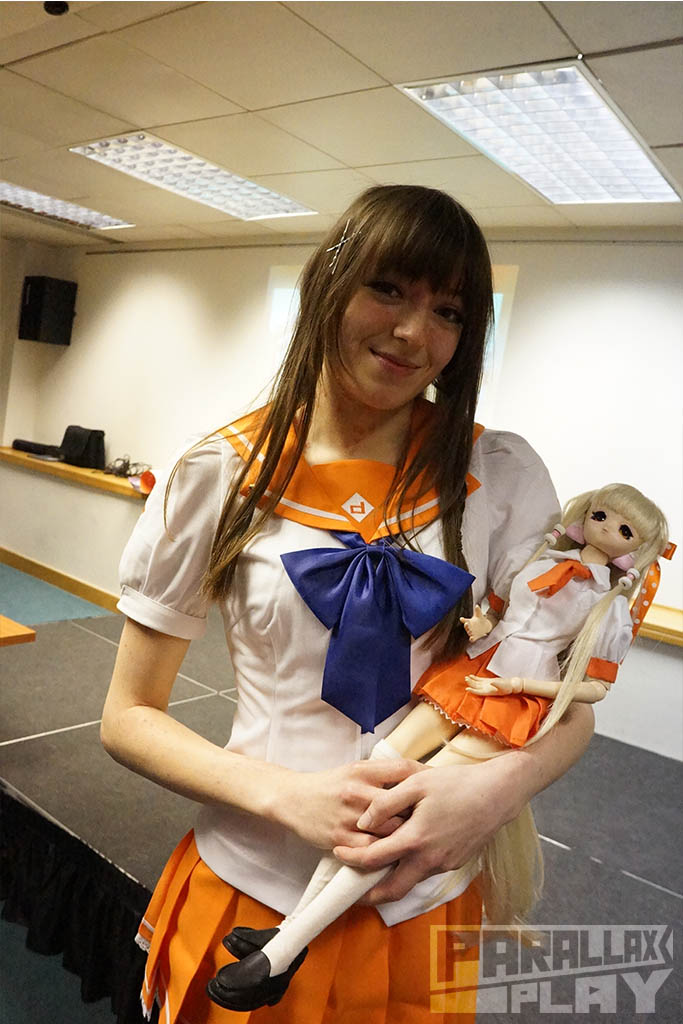
At the end of the Q&A Danny happily chatted to people and insisted we all networked with each other and make at least one new friend. This was easy as there were a variety of people in the audience of all ages, including students, business owners and cosplay fans. After a sprint to take all the Mirai poster off the walls, people queued to get photos with Choo and interviews. We even had a few cosplayers in midst of the crowd to stand with Danny and the Mirai doll in all our group photos. Jade (@woodlandbunny), one of he cosplayers in attendance, even came dressed as Mirai Suenaga, accompanied by her doll companion, also dressed as Mirai.
CJN_05
The Parallax Play team got a short and snappy one with Choo about Games, anime and breasticles. Listen to the audio interview here.

This was a great event, free hosted by Japan Foundation, Danny was in high spirits joking around about how London has changed since his last visit four years ago and how the buses have still not improved since. To keep up with the latest info on Danny’s Culture Japan series, the Mirai smartdoll or his snippets of life in japan, check out his site at www.dannychoo.com
To find more details about future events at Japan Foundation go here: www.jpf.org.uk

Article originally written for Parallax Play.

Tuesday, 11 February 2014

East Side Stories: Otakus in Love


Otakus In Love and Love Strikes! were recently part of the East Side Stories touring film festival by the Japan foundation at the ICA London and other locations.

Where: ICA London/ Belfast/Bristol/Dundee/Edinburgh/Newcastle upon Tyne/Nottingham/Sheffield
When: 31 January to 27 March 2014
Website: http://www.jpf-film.org.uk/
[rating=7]

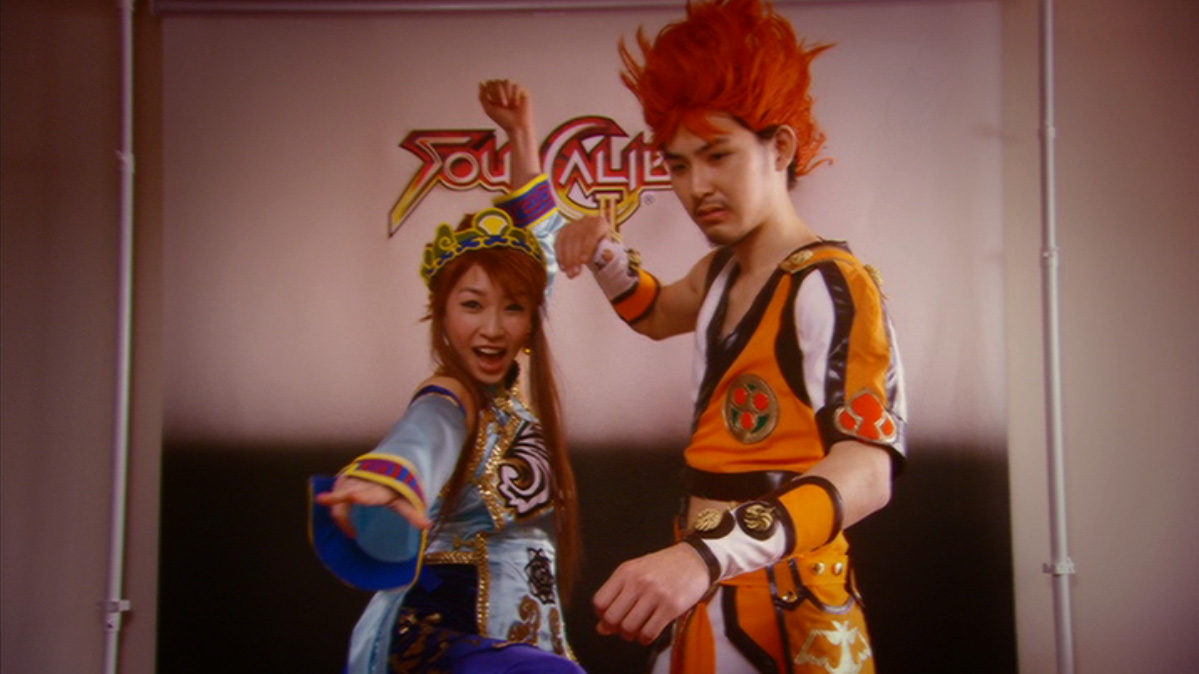
Otakus in love (Koi no Mon) follow's tramp, or more accurately low maintenance Mon Aoki (Ryuhei Matsuda) - a mis-understood 'manga artisan' who can’t seem to hold down a steady job. Mostly due to his run down appearance and his stubborn belief that one day his art will actually sell.

The problem is that his concept of manga isn't a comic strip, he arranges and paints rock in wooden boxes which freaks most people out. One day as he follows a hand drawn map on his hand which wasn't too clever as the rain washes most of it off. He bumps into Koino Akashi, she promptly maims Mon with lethal stiletto heel as he reaches for a beloved rock and he proceeds to arrive late at his new part time job at Tsugino Happy Inc.

Coincidentally she also works at Tsugino Happy Inc. The boss is perpetually-enraged at Mon's lateness and poverty stricken look and fires him at his welcome party after Mon reveals his love for manga. Koino immediately becomes fascinated as she is a full bred otaku, and if you watch the film you will find out to what extent.

Thus begins their topsy-turvy 'relationship' complete with mandatory cosplay and panty shots. Imagine getting lucky with the girl of your dreams. This film has, as one of Koino’s fans would put it, “a gift for reckless plot twists” with lots of slap stick humour and geeky references. It's great to see an infusion of over the top otaku moments contrasted with the hatred of Mr Happy and Marimoda at the job trying to tear down Mon's beliefs and talent.


Director Suzuki Matsuo is best recognised internationally for  Ichi the Killer. Matsuo dabbles in playwright, stage direction, novels, columns, essays, and occasional manga artist. Otakus in love was his debut as a film director. His adaptation of Jun Hanyunyuu's manga is fast-paced and vibrantly whatever the mood of the character. Ironically Matsuo himself plays the most laid back character of the manga bar boss.

If you're looking for a film with two hours of geek culture, this is it. From 2004 you can feel it's a bit outdated but some of the references are classics so it wouldn't matter anyway. There are a wide array of characters from the odd circus troupe or band housemates who live with Mon to the quirky people hanging around the manga bar.